Người đóng góp cho blog

Được tạo bởi Blogger.

Thứ Ba, 7 tháng 6, 2016

The Banner Saga 2

- Không có nhận xét nào
Parents need to know that The Banner Saga 2 is a downloadable action role-playing free online games for kids based on Norse mythology. In it, players lead a desperate band of survivors away from a growing darkness and an encroaching horde. They encounter all manner of hardships and must make decisions that mean the difference between life and death. Serious themes are addressed including racial prejudice, the effects of war, and the process of grieving. Though violence is cartoonish, and characters can be injured (but not killed), some cut scenes show bodies and funeral rites. Some characters flirt with each other, and dialogue suggests that they've spent a night together, but nothing is shown. Some dialogue also mentions "piss" and "asses" for language, while some characters appear drunk and talk about drinking mead. Turn-based controls are simple to understand, but the game doesn't explain some of the more complex concepts very well, leading to frustration.

WHAT'S IT ABOUT?

IS IT ANY GOOD?

QUALITY
This well-crafted sequel presents a high-tension, action-packed story that will keep your heart racing from beginning to end. Whether you import decisions from the first game or start fresh with one of the two playable heroes, you're in for hours of fun turn-based combat and nail-bitingly tough decisions that affect your characters in profound ways. The combat system is fairly easy to learn, and optional training sequences provide plenty of opportunity to master skills and gain the renown needed to level up characters. Characters all have useful, interesting combat skills that work well in conjunction with one another, and, even better, they all have distinct personalities. It's easy to get attached to your favorites, which makes the perilous events of the game all the scarier to endure. Along with addressing the notion of good versus evil, the story taps into more complex issues such as racial prejudice, processing the death of a loved one, and the need for different peoples to come together when faced with a common threat. The graphics and music are unbelievably gorgeous. The only flaws in this otherwise fabulous role-playing adventure are the occasionally confusing (possibly buggy) tutorials and the painful cliffhanger ending.

FAMILIES CAN TALK ABOUT...

  • Families can talk about bigotry. Why are some people afraid of people who are different from themselves?
  • Discuss grief. Have you ever lost a family member? How did it make you feel?
  • Think about what war does to families. What would your family do if your home was destroyed?

GAME DETAILS

Platforms:Mac, Windows
Price:$19.99
Pricing structure:Paid (Deluxe Edition also available for $24.99 and bundle that includes the first Banner Saga game available for $39.72.)
Available online?Available online
Developer:Versus Evil
Release date:April 19, 2016
Genre:Role Playing
Topics:Magic and fantasy, Adventures
ESRB rating:NR for No Descriptions

HITMAN EPISODE 3 REVIEW

- Không có nhận xét nào
Marrakech is different from previous Hitman levels. Normally, the temptation to start a review with an anecdote is irresistible - a deadly vol-au-vent here, a plummeting speaker there - but that’s almost too flippant. Marrakech is a damaged city on the precipice of collapse, and as Agent 47 your job is to remove the people exploiting that situation, sometimes by kicking toilets onto their horrid, authoritarian heads.


Like the first two levels it’s still daft, inventive, gamey fun, but you have a more legitimate reason to bump off the bad guys. Your targets are a corrupt Swedish businessman, Claus Strandberg, responsible for embezzling billions from the Moroccan people, and Reza Zaydan, a general manipulating civil unrest to his own advantage. As if you needed further motivation, you’re shown exactly why these people have to die; not just in the obvious stuff, such as angry protests outside the Swedish embassy, or horrendous civil rights violations, but also in the details. People crowd around television screens, silently worrying about the tenebrous political situation, while others try to ignore it, carrying on their daily business exactly as they would in real life. It’s a bright, varied, reactive playground, which feels like it existed before Agent 47’s murderous incursion, and will continue to exist once he’s popped off to garrotte his next victim.

It’s probably my favourite setting so far. In Paris you rub toned shoulders with the rich and famous, whereas Sapienza is comparatively sparse, with NPCs sprinkled like walnuts across a tempting Italian sprawl. Marrakech is a blend of both. The crammed marketplace is the best example yet of just how busy Io can make a Hitman level. It’s a great environment, fizzing with colour and bustle, and you can’t help but blend in and breathe the imaginary spices. By contrast, the Swedish embassy is a cool, sterile challenge, where you constantly feel under scrutiny.
This difference isn’t just cosmetic. Both areas challenge you in distinct ways. It’s harder to dispose of people in the crowded streets because hundreds of eyes are on you - I followed one potential victim for a good five minutes before the right opportunity to steal his clothes presented itself - but in the embassy, you stand out because every single person has a purpose. These contrasting approaches are in every Hitman level so far, but the clean divide makes Marrakech feel unusually generous. It’s also the most difficult level yet, and the increased time spent planning means every hit feels momentous. It’s going to be agony when the elusive target appears.
Most importantly, the hits themselves are still great. The general’s forces are holed up in an abandoned school, repurposed as a makeshift publisher of incendiary propaganda leaflets. Once you’re inside, the choice is overwhelming. My favourite option involved a school PA system, some chatty guards, a hole in the ceiling and a toilet cistern. I realise that sounds more like the synopsis of a saucy British stage farce than a recipe for slaughter, and appropriately enough, it all went wrong despite meticulous planning. It’s a useful summary of what makes Hitman so good. The joy doesn’t just come from planning the perfect hit, but the emergent, unsubtle ways of solving problems when it all inevitably goes wrong.
Perhaps the most impressive thing about Hitman is how different each level feels, a trick that becomes more impactful each time Io repeats it. Marrakesh feels fresh because it’s a tense, consequential setting, but it still offers the same fleeting opportunities for slapstick murder and creative assassination. It’s a dynamic shift after Sapienza’s jaunty holiday resort of sex-hungry masseuses and Bond-villain bunkers, but a very refreshing one. I’d still rather go on holiday to Sapienza, but Marrakech's villains are uniquely thrilling to murder.
Matt Elliott
EPISODE 2 REVIEW: If you thought Hitman’s first Paris location was big (see below for that review) then episode 2’s Sapienza is going to be quite the surprise. It lacks the hefty bulk of that first mission’s blocky palace which concentrated its many paths into a dense package, and instead, here, replaces it with the sprawl of a sunny coastal Italian town.
There’s something about this idyllic scene that feels different to anything Hitman’s tried before. It’s done public places but often with a gimmick - a roaring street party for example. But this? It’s just a little holiday town and there’s a wonderfully unassuming depth as you look into shops or the local barbers; wander through cafes or pop down to the beach to watch street performers (somehow I will kill wearing that mime’s outfit).
As a world, it’s lovely and understated which somehow makes all the little clues you uncover feel so much more rewarding. Your mission - a villa containing two scientists that need to be made not alive - is sat there right in front of you at the level’s opening, but it’s best to wander off and see what you can find before you try the front gate. Is that a new member of kitchen staff over there about to report for his first day at work? What about that private detective they mentioned in the barbers who’s due to meet with a target? And where was that florist’s van going before it had that fender bender.
Just exploring these little sleepy streets feels like a world in itself but there are people to kill and that villa isn’t going to infiltrate itself. In many ways the holiday town preamble feels like a vacation in itself - a place to have fun with the idea of being a professional assassin without too much pressure to actually kill. Even seeing 47 wander about in a summer shirt and sunglasses feels exciting - you’ve seen films like this. Now you’re playing one.
Get inside the villa though and it’s time to work. The building is modest compared to Paris but still full of winding corridors and a few wings to explore and mine for opportunities. This builds on the established toolkit of sinks to block and rat poison on with more environmental distractions like scooters to tamper and other ways to disrupt guard patrols or sneak past overly observant house staff. There are more unique things to play with as well like plague doctor costumes and an observatory as you research and scout for kitchen knives and keys.
The two targets, bioterrorist scientists Silvio Caruso Francesca De Santis, aren’t that hard to reach individually but you’re also tasked with destroying their DNA-targeting virus in a really tricky underground lab (which is a brilliantly Bond-style mountain base job). This third level of challenge adds a whole new layer of difficulty and it’s hugely rewarding as a result. The three tiers mean you’re much more committed to your plan of attack. Sure you can load and reload to your heart's content, but having to get through all objectives means you’re more likely to roll with the blows and think ahead more about risks - there’s no fudging a hit and legging it to the exit here.
As a follow up to the already impressive Paris this is a great progression. That first level showed what the game could do with a grunting scale. Sapienza, on the other hand, demonstrates a subtle ambience. The placid setting with milling tourists and locals really invigorates Hitman’s well testing mechanics while the later villa stages really test them and I've barely dipped into the challenges and side mission like additional contracts. More please.
Leon Hurley
EPISODE 1 REVIEW: It took me about 15 minutes to finish Hitman’s main Paris level. Okay, let me just back up there a second. It took about five hours to perfect that slightly scrappy speedrun. Five hours of poking around, exploring and discovering before finding one possible route through a busy high class fashion show.
Even now, about eight hours in, I’m still finding new things, previously unrevealed options, entire areas I didn’t know about and racking up more and more ways to be the perfect assassin: to kill with stealth, style, violence. And, occasionally, a well-thrown wrench. Just because you’re a pay-as-you-go murderer doesn’t mean you can’t have a little fun every now and then.

Hitman’s episodic structure might only contain one initial level (as well as two not insubstantial prologues) but it’s a perfectly crafted mechanism - full of patterns to find and exploit, and opportunities to create and abuse. For a single playable space, Paris is a many-layered spectacle to unravel, and a chunky piece of game to play with. A huge glitzy party in a palace packed with rich guests, staff and security. It looks fantastic as well, lush and detailed to the point where ‘just looking at stuff’ is a legitimate in-game activity. Even if I stopped playing now, I’d have got my money’s worth, but there's still so much to do.
You see, killing a target isn’t just a case of finding them and shooting them - although it’s an option if you’re heathen - no, in the world of Hitman, murder should be done with style and planning. You’re not just there to kill someone, you’re there to make sure all the ones you let live think ‘Holy shit, that guy’s good’. Closely followed by, ‘I should rethink all my life choices up until this point’.
MAKING A MURDERER
Hitman’s episodic structure isn’t the easiest to grasp so here’s how it all works. Paris is episode one of seven, with Italy, Marrakesh, Thailand, America, Japan and a secret finale all following at monthly intervals. The Intro Pack includes the prologue tutorials and Paris for $14.99 / £11.99, with new locations available separately for $9.99 / £7.99. Or you can buy the Full Experience to get everything as it’s released for $59.99 / £44.99. There will also be a complete version of the game released on disc at the end of the year, but minus the online challenges and extras.
It’s all about the setup. Do you find a lone guard, throttle them and use their uniform as a disguise to reach restricted areas? Can you cause a distraction and make your move in the chaos? Does that chandelier look like it might tragically fall on someone? Will those scissors come in handy later? (Pro-tip: Yes. Yes they will.)
There are a multitude of difficulty options to tailor depending on the kind of challenge you prefer, with the top level involving almost no onscreen tips or guidance. Playing blindfold is the only step up from that. However, on default the game guides you with a magic X-ray ‘Instinct’ and a new Opportunities system. This highlights useful… er, opportunities should they arise, laying out a breadcrumb trail to your target, built from overheard conversations and observed activities. It’s a lovely way of getting started and learning what’s possible in an initially overwhelmingly dense and impenetrable noise.
Despite the overtly murdery overtones no other games reviews  so perfectly captures the feeling of a Bond or Bourne type of character. The genetically-bred Agent 47 is trained to perfection and there are few gaming highs better than double tapping Johnny Security unseen, stashing the body, and walking calmly and unnoticed past the guards sprinting to investigate. Killing targets completes the level but the real reward comes from mastering the possibilities and honing your skills to do the character justice. Early playthroughs end in blood and screaming. So much screaming. But with practice you can glide in and out without anyone, even the targets, knowing what happened.
This is due in part just how beautifully it’s all crafted. As well as looking spectacular, systems and mechanics are tuned till they sing. The AI, usually the series’ most twitchy aspect, is almost faultless here. The new trespass system, judging where you’re meant to be, and/or if you’re wearing the right outfit, lets you slide silently through levels if you get it right. Take a few steps into the wrong place though and you’ll actually be asked to leave and escorted out before anything hits a fan. Really mess it up and guards search in realistic patterns, spreading out from the scene of the crime before radioing around to expand the circle.
The results of this can be amazing. After a botched murder involving a thrown knife at a buffet table, a swift dodge around a corner saw me escape pursuit. A few moments later, walking unnoticed through a different part of the party, I passed a guard just as he recited my outfit into a walkie talkie. Almost instinctively I punched him full in the face, stuffed the body in a crate, and walked off in his jacket, leaving everyone else chasing down ‘some guy in a suit’.
There’s a clear and understandable vocabulary of tools aside from the guns and explosives here. Wrenches and crowbars can be used as thrown weapons, as well as to tamper with fittings and valves. Flipped coins send guards obediently into corners, while rat poison can taint drinks and send people puking alone to the toilet. (Although, if I’m honest that last one feels a little OP currently as it’s so guaranteed to work.)
At this point I haven’t even mentioned the extra stuff - menus full of challenges that unlock new equipment, the ability to stash things in the level for later retrieval, or even start somewhere already undercover - in the kitchen as a chef, for instance. There are also Contracts - user made kills set up by players taking out any NPC and challenging you to match it - and Elusive Targets - victims that only appear for a limited time and can only be killed once.
It has a few issues, like weirdly unpredictable frame rates. It actually speeds up in places, although there is the option to lock it down. It’s connected nature is also a little confusing. You can play it either on or offline but the two don’t join up, and I was kicked out of a playthrough once because my internet went down.
As a debut for an episodic series it’s a confident and enjoyable start that bodes well for the subsequent levels (one a month for the next six months). I’ve played an early version of episode two which takes place in the fictional Italian setting of Sapienza, and that’s huge. An entire idyllic sunny mediterranean town to play with. Episode three jumps to Marrakech which is a city on the brink of war. If Paris’ palatial setting feels weighty and satisfying already, things can only get better.

Here's every E3 rumor and prediction worth talking about

- Không có nhận xét nào
TODO alt text
E3 is all about reveals, reveals, reveals. If it's not an entirely new game being announced, we're always hungry for new gameplay footage, new modes, new features. And while it would be nice to have a time machine and just skip to the good stuff, such chronal technology doesn't yet exist - and that means we're relying on the rumor mill and good old-fashioned hunches to predict what we'll see in Los Angeles this year.

Below, you'll find a list of various rumors mixed with some of our own speculation on what's coming to E3 2016. Take a look and enjoy the digital word-of-mouth:
Bethesda: A publisher perhaps best known for expansive, open-world RPGs, Bethesda has made some serious moves in the industry within recent years. Bethesda's parent company, ZeniMax, bought id Software in 2009, and since then we've gotten revamps and reboots of some classic shooters, namelyWolfenstein and Doom. Could a new vision of Quake be in the cards this year?  
Also keep in mind that Bethesda owns the rights to Prey. Prey 2 garnered a ton of buzz when it debuted at E3 2011, though it was confirmed as cancelled three years later. Company vice president Pete Hines said there's still potential for the franchise though, and current rumors suggest that a new developer under Bethesda's umbrella may have taken on the task of rebuilding the brand. Even more exciting: those rumors suggest that the developer is Dishonored studio, Arkane.  
Lastly, we suspect Tango Gameworks, the studio behind Bethesda's 2014 horror romp The Evil Within, is likely ready to show off whatever it's been working on in the two years since.  
Capcom: Do I even need to say it? Resident Evil 7. Fans of the long-running series have been waiting and hoping for this for a long time, and all rumors suggest an appearance at this E3.  
CD Projekt RED: The studio behind The Witcher series might have something to show at E3, according to co-founder Marcin Iwinski, but it won't be the highly-anticipated Cyberpunk 2077. And … that's pretty much all we've heard. The Poland-based studio is absurdly good at keeping secrets.
Electronic Arts: Okay, so technically these aren't E3 rumors, since EA will be hosting its own, off-site event. But it's happening on the same days and is literally less than a block away, so I'm gonna count it. As to what we can expect, we know that Battlefield 1 and Titanfall 2 will be making an appearance, but signs also point to a possible reveal of the Visceral Games-developed, third-person Star Wars game, and I feel like things have been too quiet on the Mass Effect: Andromeda front.  
Microsoft: According to reports and FCC filings, Microsoft is working on not one, but two new Xbox consoles. One of these new pieces of hardware is said to be an Xbox One Slim (name not confirmed), while the other is a console vastly more powerful than the current Xbox One. Microsoft could unveil both or neither at E3, but I'd personally wager that we'll see and get lots of details on the Slim, while the more powerful Xbox (codenamed "Scorpio") will only be teased, if mentioned at all.  
On the software side, don't be surprised if we see the usual suspects: Halo,Gears of War, and Crackdown. Some other Microsoft partners will likely also show off new footage of games that debuted recently, such as Comcept'sReCore, Platinum's Scalebound, and Rare's Sea of Thieves. There's also a rumor going around that Xbox owners will get another entry in Capcom's Dead Risingseries.  
Nintendo: Nintendo has said that The Legend of Zelda for Wii U will be the only playable game it has at the show, so all speculation on The Big N revolves around just how true that will be. There will also be livestreams with some time dedicated to Pokemon, Monster Hunter, Dragon Quest, and Tokyo Mirage Sessions #FE. As for news on the next Nintendo console (codenamed "NX"), that's a big nope; Nintendo has said it won't be at the show.  
So the real question here is: Is that it?  
Sony: Microsoft isn't the only company with a new piece of hardware in the works. The PS4 Neo (AKA "PS4K" and "PS4.5") has been known about for a few months now, so keeping it hidden feels somewhat pointless. Whatever the Neo ends up being, rumors suggest we'll see it - or at least have it confirmed out loud by Sony - at E3.  
Word of mouth also says that Sucker Punch, the studio behind the Infamous series, is working on a new Spider-Man video game. This is interesting, because Activision is the publisher that owns the rights to Spidey in video game form, but Sucker Punch is owned by Sony. In any case, the web-slinger's appearance in Captain America: Civil War and his upcoming solo film have people pumped for more webhead adventures, so a debut at E3 seems likely.  
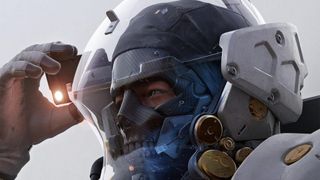
Hideo Kojima's next game will be coming to Sony's system first, and we suspect he'll be brought onstage to drum up hype for it, perhaps showing off some concept art or basic renderings. He's been doing as much on Twitter recently, where he revealed the mascot for Kojima Productions, and fans are speculatingthat actor Norman Reedus (who was slated to appear in Silent Hills, before it got cancelled) is behind the helmet. Just don't expect anything close to a trailer or game footage - Kojima Productions hasn't even existed for a full year yet!
God of War concept art has also been popping up, showing Kratos (or someone with the same muscular build and markings) in Norse-inspired settings. It feels like a long shot, but this could be the year Sony's angriest franchise makes a big return.  
Lastly, I've got my fingers crossed for a release date and some extended gameplay of
The Last Guardian. Seriously, I need it in my life.  
Take-Two: The company behind Rockstar and 2K Games review  tends to stay relative ly quiet during E3, so don't expect anything mind-blowing. Still,
fans have been begging for
Red Dead Redemption to be made backwards compatible on Xbox One, so a simple confirmation of that could send the internet into a frenzy. There's also a
rendering of Liberty City's Middle Park in Grand Theft Auto 5's engine that made the rounds recently, so something GTA related could also be in the cards.  
Square Enix: The presence of
Final Fantasy 15 and
Deus Ex: Mankind Dividedare no-brainers, but Square Enix had some surprises up its sleeve last year, so maybe don't be too surprised if we get another
Nier 2-level announcement. Also, as a reminder: there is going to be a Nier sequel.
There's also the promise of Tomb Raider-related news, but what exactly that could be is anyone's guess. Still, it's worth noting that the
original Tomb Raider came out 20 years ago.
Ubisoft: Watch Dogs 2 is a given. Ditto for Ghost Recon: Wildlands. And we know there won't be an Assassin's Creed game this year. Evidence still points to another AAA title from the French publisher/developer though, and I'd wager it's going to be something in an established property. Far Cry seems the most likely bet, but there's also images of a supposed Prince of Persia reboot lurking around the internet. Or, you know, maybe Beyond Good & Evil 2 will finally happen.  
Yeah, probably not.  
Warner Bros. Interactive: Warner Bros holds some of the most valuable franchises, series, and companies in the world in its portfolio, including Lord of the Rings, DC Comics, and Lego. And wouldn't you know it, rumors suggest we'll be getting more of each, with current whispers pointing to a Shadow of Mordor sequel, another Batman free online games for kids , and more Lego Dimensions, respectively.  
That's all the E3 2016 rumors and predictions for now. Heard any that we missed? Let us know in the comments or shooting us an email!

Thứ Ba, 31 tháng 5, 2016

Lumo Game Review

- Không có nhận xét nào
Parents need to know that Lumo is a downloadable single player adventure/puzzle game. Players take control of a character pulled into a retro-themed fun games world and have to figure out how to maneuver through various obstacles. It's a relatively simple game to play, though timing and precision are a major factor and can prove a bit frustrating. There's not any in-game dialogue to help players along or progress the story, but that also means there's no offensive language to deal with for younger players. Violence in the game is mild, limited to interaction with obstacles like spikes, poison, etc. When the player dies, the character vanishes in a flash of light and restarts the current room.


WHAT'S IT ABOUT?

The day seems to start like any other in LUMO, though this one involves a trip to a vintage gaming show. While looking over the various tables and exhibits, you come across a strange computer sitting along in a corner. Suddenly, the computer fires up, hits you with a strange beam, and sucks you right into the screen. You wake up as the hero in a fantasy themed puzzle game. As you explore the rooms that surround you, looking for a way back to the real world, you quickly discover that there's even more to this strange adventure than meets the eye. One minute you're in a medieval dungeon, the next you're surrounded by space age electronics the looks like it's been ripped from any sci-fi staple found in an '80s arcade. You'll need to use your wits, your surroundings, and a few extra tricks to navigate your way through this retro gaming mashup and hopefully find your way back home.

IS IT ANY GOOD?

QUALITY
 
A little taste of nostalgia can go a long way, and sometimes it's great to pack up your expectations and enjoy a little road trip down memory lane. That's exactly what you get with Lumo, a fun little retro-styled isometric puzzler in the vein of old school games like Solstice and Marble Madness. The game is a gorgeous looking title, with a lot of charm and quirkiness not often found these days. The combination of visuals and music works great together to create a sort of Zen-like state of calm and peace of mind you'll need when facing the obstacles ahead.
While Lumo is a unique experience and can be a lot of fun, there's also a lot of frustration. The game basically throws you in the deep end of the pool without teaching you how to swim first. There's absolutely no tutorial, no in-game directions, no dialogue, or anything else to help you figure out that you're doing. Each of the interlocking rooms is a new case of trial and error as you rack your brain to figure out what you're supposed to be doing. There's no hand holding here. You're either up to the mental challenge or you're stuck. More maddening are the rooms that require pinpoint precision and timing to advance, which can be a bit awkward to figure out, especially considering the game's isometric view. Despite this, Lumo still offers up a solid, enjoyable brain teasing experience, filled with plenty of old school appeal and tongue-in-cheek references to keep you coming back for more.

FAMILIES CAN TALK ABOUT...

  • Families can talk about solving puzzles. How can puzzle games help to develop critical thinking skills that will be useful outside of the games?
  • Talk about the evolution and legacy of video game. How have games changed over the years and how do games from the past influence more modern releases? 

GAME DETAILS

Platforms:Linux, Mac, PlayStation 4, Windows, Xbox One
Price:$19.99
Pricing structure:Paid
Available online?Available online
Developer:Rising Star Free online games
Release date:May 24, 2016
Genre:Puzzle
Topics:Magic and fantasy, Adventures, Monsters, ghosts, and vampires,Robots
ESRB rating:E10+ for Violent References, Comic Mischief

Thứ Hai, 30 tháng 5, 2016

Doom is a fiendishly moreish, impeccably refined shooter - review

- Không có nhận xét nào
In Doom’s first moments you break free from metal restraints with your bare hands before smashing a demon’s head in against the edge of a stone table. As primary mission statements go, few games are so startlingly direct, but Doom revels in the simplicity of its ultra violence. This latest game from revered studio id Software takes much from the timeless 1993 original - its frantic bloodshed being the most immediately noticeable - but the Doom of 2016 also goes the distance to achieve surprise greatness of its own.
Its exemplary gunplay is distilled into a gloriously short feedback loop that gets exponentially more satisfying. New Doom feels much faster than its iconic forebear, and after a brief introduction it continues to dial up the action without giving pause. By midway through its lengthy campaign, those first few fights feel like child’s play. By the game’s final quarter, you’ll be frequently amazed by the devastating onslaught that Doom delivers so consistently. It’s a wonderful progression of madness that never stops for breath.
The premise is simple: you shoot demons. The new trick is to shoot demons until they stagger before moving in for a Glory Kill - a contextual finisher that sees the faceless Doom Marine breaking, tearing, smashing, ripping, sawing and eviscerating his foes to death. Killing in this way results in a colourful shower of health and ammo packs - vital in a game without regenerating health and where your primary interaction with its world is shooting until there’s nothing left to shoot.
It’s a flawless slice of game design - easy enough to master, fast enough to be unintrusive, graphic enough to feel empowering, and intrinsic enough to survival for you to keep coming back for more and more and more. Id’s designers know this, and make a marked point of giving you very little else to concentrate on, or care about, as you progress.
The inimitable Doom Marine doesn’t care either - his indifference communicated through a series of mute physical expressions. As UAC facility boss Samuel Hayden explains the importance of some research, Doom Marine smashes it to pieces before Hayden can even finish. When he’s shown vital information on a holo-screen, he pushes it aside to get on with the killing. The intention is clear: Doom’s small cast of supporting characters are merely talking signposts to propel you from one location to the next.
But what locations they are. Hopping between a ravaged research base on Mars and the burning depths of Hell, Doom’s locations could be called derivative. Its sci-fi base is all pristine metal and crisp lighting, while the underworld is fire and brimstone. This isn’t new to games by any stretch, but Doom goes a long way to selling its hellscapes far better than any game before it.
Part of this comes from some great art direction, but mostly from some astounding technical flourishes. Doom is incredibly detailed, especially on high-end PCs, and whether you’re fighting through a flaming foundry, an AI core cooled to absolute zero, or the corpse infested wastes of Hell itself, it’s distractingly pretty. Infrequent shifts from the game’s near constant reddish tinge feel memorable, but you’re always ready to get back to its blood soaked corridors. Consider as well that it runs at a faultless 60fps, and id should be commended for the performance it delivers on all platforms.
As soon as you pick up a shotgun, sidelining the game’s pistol within the first two minutes, Doom starts proper. From there, it continues to introduce new weapons at pitch perfect pace so that you’re always playing with something new and exciting; an assault rifle, a rocket launcher, a super shotgun, a chaingun, the iconic and unashamedly named Big Fucking Gun, and even more in between. Then there’s the chainsaw - rather than serve as a standard melee weapon it operates as a one-hit kill device that relies on a finite fuel source. The bigger the demon you want to kill, the more fuel it uses, so the chainsaw’s gruesome flesh-ripping is saved only for the direst of straits.
The game relishes in the discovery of each weapon, slowing the action to a crawl for a few seconds as Doom Marine looks it up and down with a sadistic sense of appreciation. As your arsenal expands, switching between guns with your radial menu quickly becomes second nature. You learn to move around that menu as effortlessly as the Marine moves around the world; every design consideration is beyond precise, providing perfect balance to the ensuing chaos.
That chaos is without doubt the game’s crowning achievement. Doom’s demons are varied and grotesque - dangerous on their own, but positively lethal in groups. The only way to win is to move faster, shoot quicker and be better. Pumping a Hell Knight full of shotgun shells, raining plasma orbs down on a group of Possessed, or unleashing a devastating Gauss Cannon blast on a staggered Revenant, Doom creates a ballet of bloody murder that requires constant thought and unending movement to keep up. The level design encourages - almost forces - mobility at all times, and while the entire game could essentially be summed up as a series of multi layered arenas connected by thin, linear corridors, Doom never suffers from this. Despite an unashamed focus on self-aware stupidity and uber gore, Doom is remarkably smart and dynamic throughout.
The small handful of modern design compromises that Doom makes are well implemented. The most noticeable - upgrades for your weapons - are by far the biggest shakeup to the Doom formula. The assault rifle gets a scope and a missile barrage, the shotgun gets a burst mode and a grenade launcher, the rocket launcher gets a homing upgrade and a remote detonator, and so on. Each upgrade can itself be upgraded by using the skill points earned from killing enemies. The result is a set of unique guns that are as deep as they are diverse.
There are also dozens of secrets to find, optional challenges to complete to earn passive skill runes, and a considerable amount of codexes that give a surprisingly in-depth look at Doom’s backstory. None of it’s mandatory - which will appease purists who balk at Doom having anything resembling lore - but the finer details are appreciated in a game that needs to remain relevant beyond hardcore nostalgia.
Doom’s bombastic cavalcade of a campaign is its centrepiece, but its accompanying multiplayer provides a wanton aside that never quite reaches the dizzying heights of its offline counterpart. It’s just as frenetic, fast-paced and explosive, borrowing the verticality of id’s other shooter, Quake. Ironically, its biggest problem - that it doesn’t boast the longevity that it needs to survive against its contemporaries - is also what makes it so refreshing in the short term.
SnapMap is another story entirely. This intuitive but devilishly complex level editor encourages the combined imagination of Doom’s community to run wild. In it, players can manipulate countless game systems, tinker with its AI, set up their own scripted events, and tonnes more. There are already faithful recreations of the original Doom available to play, and the amount of levels available only increases by the hour. It’s a feature no one expected, but which really works well, and positively knocks all other similar editors out of the park.
A mention also needs to be given to Doom’s soundtrack. Composed by Mick Gordon - responsible also for Wolfenstein: The New Order’s excellent score - Doom’s chugging heavy metal juxtaposes down-tuned 9-string guitars with modern electronica in what is the best metal album of the last few years. Whether it’s the booming pulses of BFG Division or the lightning fast riffs of Rip & Tear, Doom’s soundtrack seamlessly combines familiar Doom motifs with fresh new musical ideas. Without it, the game wouldn’t nearly be as special. Or as deafeningly loud.
There were no doubts that Doom would play fast, look stunning, or be gory; the surprise is that Doom is as relevant, smart and self-aware as it is; merging old ideas with new ones; injecting its near-flawless shooter mechanics into a campaign that’s impeccably refined, hilariously dumb and fiendishly moreish. In an overcrowded genre that’s hellbent on one-upping itself in a slew of increasingly tepid iterations, Doom’s multi-faceted personality is praiseworthy. After almost 25-years, the series finally escapes its precursor’s shadow, once and for all.

Ratchet & Clank is the closest thing to playable Pixar - review

- Không có nhận xét nào
Ifone thing has defined this console generation it is remastered games; developers trading on nostalgia and making a quick penny by prettying up  last-gen titles. From increased resolutions to complete art overhauls, the definition of ‘remaster’ is malleable. Ratchet & Clank, however, is not a remaster but a complete remake, with modern controls, new enemies, locations, dialogue, visuals and voice talent to tie in with the upcoming animated movie.
Ratchet & Clank stands on its own merits, never relying on fond memories of the 2002 PlayStation 2 original beyond knowing gags. You might be tired of being asked to buy the same game twice, or perhaps  you’ve been burned before by a low-quality movie tie-in, but don’t let that put you off, as this is one of the best console exclusives this generation.

Ratchet is a lombax, an almost extinct race of bipedal felines. The anthropomorphic orphan works in a garage on planet Veldin, daydreaming of joining the Galactic Rangers, an elite group of interplanetary heroes fronted by a sentient chest with a big ego and a small brain, Captain Qwark, who also acts as the story’s narrator. Ratchet idolises this group, and the game begins with him leaving the garage to enter a televised audition to become a Ranger, which also acts as a smart tutorial for the basics.
As the garage door peels back and you walk outside into this lush, 3D world, the first thing that strikes you is just how pretty it is. It’s somewhat of a cliche to say, but this really is the closest we’ve ever come to a playable Pixar production. It’s not just the fur clinging to Ratchet’s skin or the way his ears flutter as you move - every single scene is like living concept art. As you first step foot on each planet, the camera pulls back from its usual position behind Ratchet, revealing some of the prettiest panoramic vistas I’ve ever seen in a game.

It’s so busy, too. When you leave the garage you’re greeted by futuristic towers jutting out in the distance, backed by the fireworks celebrating the Galactic Ranger trials. Flying cars zip along the skyline, frogs hop along the plains and blades of grass sway in the wind. Later you visit futuristic factory lines filled with smoke stacks, rain slicked high-tech cities, frozen warzones, tropical islands under siege. The galaxy-saving, planet-hopping nature of the storyline allows loads of visual variety.
This variation also extends to the gameplay. At its core, Ratchet & Clank is a third-person shooter with platforming elements, but the gadgets and weaponry spice it up. You start out with a basic blaster that fires out single shots of hot plasma. Your aiming reticule snaps to the nearest enemy, and you can strafe to avoid incoming fire, tapping jump to flip, cartwheel and barrel roll out of the way of danger. You can also whack enemies with your wrench. It’s a simple but slick system.

By the end of the game, your exotic arsenal is massive, from the fire-spitting Magmabuster to the multi-rocket firing Peacemaker. As is developer Insomniac's wont, there is plenty wacky stuff in there, too: like the Sheepinator, which turns enemies into, well, sheep; the Groovitron, a disco ball-shaped grenade that forces enemies to start dancing with a unique animation; or my personal favourite, the Pixeliser HD, a shotgun that fires a pixel blast, turning enemies into digitised, retro versions of their character models, eventually smashing them into tiny cubes. When you take a room full of enemies out with the Pixeliser HD, the collectable bolts - used to buy weapons - debris and pixels swirl around the entire screen. Like I said, it’s busy.
The wide array of weaponry is what keeps combat fun, with a compelling upgrade system for each. Your equipment and abilities follow suit, unlocking more interesting ways to traverse the environment.  Later, you get a helicopter upgrade for Clank, allowing you to use the little robot as he’s strapped to your back to propel yourself further, jump higher and glide across gaps. There is always a tangible sense of progress.

You also control Clank at some points, completing puzzles with throwable robots, making bridges, powering machinery and creating bounce pads. It’s nothing too tasking, but the change of pace is a welcome one. In fact, pacing is one of Ratchet & Clank’s strongest assets - one minutes you’ll be scrapping armies of robots with your Pixeliser HD and another you’ll be taking part in a hoverboard tournament, piloting Ratchet’s spaceship, or grinding a rail at high speed.
It is this pep and variety that makes Ratchet & Clank feel like a proper adventure, providing an excellent time right up until the credits roll, and into a new mode unlocked upon completion. While we’re all busy waiting for Uncharted 4 to show us what the PlayStation 4 can do, Insomniac has tapped into the console’s power and funneled it through the lens of an animated movie. Not only is Ratchet & Clank the best family-friendly game that I’ve played in a long time, it’s one of PS4’s standout titles and a blistering return to the glory days of the 3D platformer.

Thứ Năm, 26 tháng 5, 2016

STAR FOX ZERO REVIEW

- Không có nhận xét nào
Unbelievable. How else could I sum up my disappointment in the supposed grand return of a franchise that hasn't seen a decent entry in nearly twenty years and explain how it's a perfect representation of the Wii U's core failing as a console? Every fear that the Wii U's Gamepad is a gimmicky albatross around Nintendo's neck comes to fruition here, as Star Fox Zero's attempts at legitimizing that idiosyncratic bit of tech become its undoing.

The most exasperating part is that, on paper, Star Fox Zero should at least be a pretty decent time while it lasts. Developed in conjunction with Platinum Games (the team behind the spectacular Bayonetta 2), Star Fox Zero occupies a strange place in series canon. It's neither prequel nor sequel, but rather a reinterpretation of the events of Star Fox 64 (which itself was a reboot of the original Star Fox on SNES). As Fox McCloud, the head of do-gooder mercenary group Star Fox, you'll move from planet to planet, defending the galaxy's citizens from Andross and his evil armada. This usually involves piloting one of several different vehicles depending on the situation, spending time in a series of on-rails sequences (which funnel you forward to a destination), or in larger, open combat arenas. It's your job to fly or drive around and shoot down everything in sight.


In Star Fox Zero, you do that by physically moving the Gamepad around to aim your Arwing's reticle, while using the analog stick to move your craft. It's as awkward and ungainly as it sounds, like rubbing your stomach while patting your head - only you have to simultaneously avoid incoming laser fire. Many of Zero's stages (its larger, screen-filling bosses in particular) require that you shift your focus back and forth between Gamepad and TV screen while you're thrusting your Gamepad around to aim your shots. Maneuvering land vehicles in particular feels like unbridled chaotic flailing (and not in a good way), and for a series that typically values precision under fire, this is a problem. To top it off, you'll find yourself mashing the Y button to recalibrate your aim every few seconds.  After a few hours of play, I felt like I was finally getting the hang of things, but there was never a moment where I felt like Star Fox was better served because of these controls.

This is a damn shame, because when it works, Zero can feel as thrilling as the best moments from Star Fox 64. Part of this is, admittedly, because Zero copies many of the same story beats and action sequences of its predecessors. If you've played any of the original games, you'll probably recognize a lot, like the opening assault on Corneria, your scuffles with rival mercenary group Star Wolf, or the fact that Falco continues to be a giant tool. It can seem like a rehash at times, but the way Zero pulls in elements from different parts of the series makes it feel like a greatest hits compilation, even bringing in deep cuts like the chicken-like Walker originally intended for the cancelled Star Fox 2. Platinum's own penchant for big explosions and theatrical set-pieces elevates these new approaches to old levels more often than not, where a dogfight quickly morphs into an assault on a galactic cruiser, causing you to fly through a gap in its shield, transform into your walker, take it down from the inside, then zip away before it blows up.

TOWER DEFENSE

The retail edition of Star Fox Zero includes a copy of Star Fox Guard (also sold separately on the Nintendo eShop), a tower defense game that teams up Slippy Toad with his uncle Grippy as they protect their power core from endless waves of evil robots. It's… actually pretty fun! The TV screen is filled with a dozen cameras, and you use the Gamepad to switch between them so you can gun the robots down before you get overwhelmed. It's not terribly deep, but considering you don't have to move the Gamepad around to aim, you'll probably have a better time with it.
The wholly original creations within Star Fox Zero don't fare so well, though, and piloting the brand-new Gryowing in particular is a plodding chore. It slowly hovers from point to point, its blasters are piddly peashooters so you're better off avoiding combat altogether, and you use it to open locked passageways by hacking computers with an attached robot. The constant start and stop required to solve these inconsequential puzzles turn a potential palate cleanser into a pacing killer, especially when compared to the other, far more exciting vehicles you have at your disposal. Luckily, you only fly the Gyrowing in a couple of levels, and most of the time Zero knows to focus on what it does best: moving fast and blowing stuff up.

Another thing Zero copies from prior Star Fox games: you can finish it in about two or three hours. Like its predecessors, the replayability here comes from exploring levels you've beaten already, looking to increase your high score while searching for secret medals and hidden paths. It's also pretty light on additional modes. Other than the campaign, there are handful of training missions and an additional mode to unlock. Without a proper competitive multiplayer mode to fall back on - there's local co-op, but it's just the same campaign levels with one player flying the ship and the other aims and shoots - the whole package feels very slight.


But slight is fine if it's at least fun to play, and even a perfectly designed campaign packed to the rafters with content couldn't cover up the awkwardness of Star Fox Zero's controls. That's what's so disappointing - there are moments of greatness in here, little sparks that, despite other flaws, remind me why I loved Star Fox 64 in the first place. Unfortunately, all of it is constantly undermined by a slavish devotion to wrapping the core design around every feature of the Wii U's Gamepad, regardless of whether it makes sense or feels good to play. 19 years is a long time to wait for a game to live up to the legacy of Star Fox 64, but we're going to have to keep waiting. This game isn't it.

HITMAN EPISODE 2 REVIEW

- Không có nhận xét nào
If you thought Hitman’s first Paris location was big (see below for that review) then episode 2’s Sapienza is going to be quite the surprise. It lacks the hefty bulk of that first mission’s blocky palace which concentrated its many paths into a dense package, and instead, here, replaces it with the sprawl of a sunny coastal Italian town.

There’s something about this idyllic scene that feels different to anything Hitman’s tried before. It’s done public places but often with a gimmick - a roaring street party for example. But this? It’s just a little holiday town and there’s a wonderfully unassuming depth as you look into shops or the local barbers; wander through cafes or pop down to the beach to watch street performers (somehow I will kill wearing that mime’s outfit).


As a world, it’s lovely and understated which somehow makes all the little clues you uncover feel so much more rewarding. Your mission - a villa containing two scientists that need to be made not alive - is sat there right in front of you at the level’s opening, but it’s best to wander off and see what you can find before you try the front gate. Is that a new member of kitchen staff over there about to report for his first day at work? What about that private detective they mentioned in the barbers who’s due to meet with a target? And where was that florist’s van going before it had that fender bender.

Just exploring these little sleepy streets feels like a world in itself but there are people to kill and that villa isn’t going to infiltrate itself. In many ways the holiday town preamble feels like a vacation in itself - a place to have fun with the idea of being a professional assassin without too much pressure to actually kill. Even seeing 47 wander about in a summer shirt and sunglasses feels exciting - you’ve seen films like this. Now you’re playing one.

Get inside the villa though and it’s time to work. The building is modest compared to Paris but still full of winding corridors and a few wings to explore and mine for opportunities. This builds on the established toolkit of sinks to block and rat poison on with more environmental distractions like scooters to tamper and other ways to disrupt guard patrols or sneak past overly observant house staff. There are more unique things to play with as well like plague doctor costumes and an observatory as you research and scout for kitchen knives and keys.


The two targets, bioterrorist scientists Silvio Caruso Francesca De Santis, aren’t that hard to reach individually but you’re also tasked with destroying their DNA-targeting virus in a really tricky underground lab (which is a brilliantly Bond-style mountain base job). This third level of challenge adds a whole new layer of difficulty and it’s hugely rewarding as a result. The three tiers mean you’re much more committed to your plan of attack. Sure you can load and reload to your heart's content, but having to get through all objectives means you’re more likely to roll with the blows and think ahead more about risks - there’s no fudging a hit and legging it to the exit here.

As a follow up to the already impressive Paris this is a great progression. That first level showed what the game could do with a grunting scale. Sapienza, on the other hand, demonstrates a subtle ambience. The placid setting with milling tourists and locals really invigorates Hitman’s well testing mechanics while the later villa stages really test them and I've barely dipped into the challenges and side mission like additional contracts. More please.


EPISODE 1 REVIEW: It took me about 15 minutes to finish Hitman’s main Paris level. Okay, let me just back up there a second. It took about five hours to perfect that slightly scrappy speedrun. Five hours of poking around, exploring and discovering before finding one possible route through a busy high class fashion show.

Even now, about eight hours in, I’m still finding new things, previously unrevealed options, entire areas I didn’t know about and racking up more and more ways to be the perfect assassin: to kill with stealth, style, violence. And, occasionally, a well-thrown wrench. Just because you’re a pay-as-you-go murderer doesn’t mean you can’t have a little fun every now and then.


Hitman’s episodic structure might only contain one initial level (as well as two not insubstantial prologues) but it’s a perfectly crafted mechanism - full of patterns to find and exploit, and opportunities to create and abuse. For a single playable space, Paris is a many-layered spectacle to unravel, and a chunky piece of game to play with. A huge glitzy party in a palace packed with rich guests, staff and security. It looks fantastic as well, lush and detailed to the point where ‘just looking at stuff’ is a legitimate in-game activity. Even if I stopped playing now, I’d have got my money’s worth, but there's still so much to do.

You see, killing a target isn’t just a case of finding them and shooting them - although it’s an option if you’re heathen - no, in the world of Hitman, murder should be done with style and planning. You’re not just there to kill someone, you’re there to make sure all the ones you let live think ‘Holy shit, that guy’s good’. Closely followed by, ‘I should rethink all my life choices up until this point’.


MAKING A MURDERER

Hitman’s episodic structure isn’t the easiest to grasp so here’s how it all works. Paris is episode one of seven, with Italy, Marrakesh, Thailand, America, Japan and a secret finale all following at monthly intervals. The Intro Pack includes the prologue tutorials and Paris for $14.99 / £11.99, with new locations available separately for $9.99 / £7.99. Or you can buy the Full Experience to get everything as it’s released for $59.99 / £44.99. There will also be a complete version of the game released on disc at the end of the year, but minus the online challenges and extras.
It’s all about the setup. Do you find a lone guard, throttle them and use their uniform as a disguise to reach restricted areas? Can you cause a distraction and make your move in the chaos? Does that chandelier look like it might tragically fall on someone? Will those scissors come in handy later? (Pro-tip: Yes. Yes they will.)

There are a multitude of difficulty options to tailor depending on the kind of challenge you prefer, with the top level involving almost no onscreen tips or guidance. Playing blindfold is the only step up from that. However, on default the game guides you with a magic X-ray ‘Instinct’ and a new Opportunities system. This highlights useful… er, opportunities should they arise, laying out a breadcrumb trail to your target, built from overheard conversations and observed activities. It’s a lovely way of getting started and learning what’s possible in an initially overwhelmingly dense and impenetrable noise.

Despite the overtly murdery overtones no other game so perfectly captures the feeling of a Bond or Bourne type of character. The genetically-bred Agent 47 is trained to perfection and there are few gaming highs better than double tapping Johnny Security unseen, stashing the body, and walking calmly and unnoticed past the guards sprinting to investigate. Killing targets completes the level but the real reward comes from mastering the possibilities and honing your skills to do the character justice. Early playthroughs end in blood and screaming. So much screaming. But with practice you can glide in and out without anyone, even the targets, knowing what happened.


This is due in part just how beautifully it’s all crafted. As well as looking spectacular, systems and mechanics are tuned till they sing. The AI, usually the series’ most twitchy aspect, is almost faultless here. The new trespass system, judging where you’re meant to be, and/or if you’re wearing the right outfit, lets you slide silently through levels if you get it right. Take a few steps into the wrong place though and you’ll actually be asked to leave and escorted out before anything hits a fan. Really mess it up and guards search in realistic patterns, spreading out from the scene of the crime before radioing around to expand the circle.

The results of this can be amazing. After a botched murder involving a thrown knife at a buffet table, a swift dodge around a corner saw me escape pursuit. A few moments later, walking unnoticed through a different part of the party, I passed a guard just as he recited my outfit into a walkie talkie. Almost instinctively I punched him full in the face, stuffed the body in a crate, and walked off in his jacket, leaving everyone else chasing down ‘some guy in a suit’.

There’s a clear and understandable vocabulary of tools aside from the guns and explosives here. Wrenches and crowbars can be used as thrown weapons, as well as to tamper with fittings and valves. Flipped coins send guards obediently into corners, while rat poison can taint drinks and send people puking alone to the toilet. (Although, if I’m honest that last one feels a little OP currently as it’s so guaranteed to work.)

At this point I haven’t even mentioned the extra stuff - menus full of challenges that unlock new equipment, the ability to stash things in the level for later retrieval, or even start somewhere already undercover - in the kitchen as a chef, for instance. There are also Contracts - user made kills set up by players taking out any NPC and challenging you to match it - and Elusive Targets - victims that only appear for a limited time and can only be killed once.


It has a few issues, like weirdly unpredictable frame rates. It actually speeds up in places, although there is the option to lock it down. It’s connected nature is also a little confusing. You can play it either on or offline but the two don’t join up, and I was kicked out of a playthrough once because my internet went down.

As a debut for an episodic series it’s a confident and enjoyable start that bodes well for the subsequent levels (one a month for the next six months). I’ve played an early version of episode two which takes place in the fictional Italian setting of Sapienza, and that’s huge. An entire idyllic sunny mediterranean town to play with. Episode three jumps to Marrakech which is a city on the brink of war. If Paris’ palatial setting feels weighty and satisfying already, things can only get better.